
Casement Windows in Ottawa
A casement window opens like a small door. You turn the crank, the sash swings outward to a full 90°, and every inch of the glass becomes open air. When you close it, the sash presses into its weatherstripping instead of sliding past it. That squeeze is why casements are one of the tightest-sealing windows you can put in an Ottawa wall.
Advantage Enterprises Windows & Doors has supplied and installed casement windows across Ottawa since 2009. We are a local, family-owned company with more than 3,000 completed projects. Every installation is done by our own crew, never subcontractors.
Your Local Experts — One Call Away (613) 850-7887
Casement Windows at a Glance
- Operation: crank-out sash, hinged on the side, opens outward to 90°
- Frame: 100% lead-free uPVC, fusion-welded corners, multi-chamber profile
- Sealing: triple weatherstrip seals; lab-tested air leakage of 0.0 L/s·m²
- Glass: double or triple pane, argon-filled, Low-E coated, warm-edge foam spacer
- Energy rating: ER 34 to 38 depending on glass package (ENERGY STAR minimum is ER 34)
- Colours: white standard, over 100 custom painted colours, wood-look stain
- Made in Canada: Canadian-made windows from our supplier, Vinyl Pro Window Systems
- Warranty: 25 years on white vinyl, lifetime on hardware, 10 years on sealed glass and workmanship


Why Does a Casement Seal Tighter Than a Sliding Window
A sliding sash has to glide past its seals, so those seals can only lightly brush the glass frame. A casement works the other way. As you crank it shut, the sash pulls straight back against the frame, compressing the gaskets all the way around.
Ottawa’s west and north winds actually push a closed casement sash harder into its seals. In a lab air-leakage test, the casement unit we install measured 0.0 L/s·m², the lowest result the test reports. For homeowners, that usually means no whistling on windy nights and less cold air at the sill.
Tested Performance by Glass Package
These figures come from the manufacturer’s CSA A440.2-19 simulation report for the casement window we install (unit size 600 mm × 1500 mm, vinyl frame and sash). Lower U-factor means less heat loss. Higher Energy Rating (ER) means better overall winter performance.
|
Glass package |
Panes |
Whole-window U-factor (W/m²K) |
Energy Rating (no grilles) |
ENERGY STAR (2020 criteria) |
|
Standard: Low-E 180, argon |
2 |
1.45 |
34 |
Certified |
|
Low-E 180 + Low-E i89 room-side coating, argon |
2 |
1.30 |
35 |
Certified |
|
Triple: one Low-E 180 coating, argon |
3 |
1.25 |
35 |
Certified |
|
Triple: two Low-E 180 coatings, argon |
3 |
1.05 |
38 |
Most Efficient level |
|
Triple: two Low-E 180 + Low-E i89, argon |
3 |
1.00 |
38 |
Most Efficient level |
ENERGY STAR 2020 requires a U-factor of 1.22 or lower, or an ER of 34 or higher. The “Most Efficient” level requires a U-factor of 1.05 or lower, or an ER of 40 or higher. Adding internal grilles lowers the ER by about 2 to 3 points, so we confirm the final rating for your exact order at the estimate.
Our recommendation for most Ottawa homes: the double-pane Low-E 180 + i89 package. It meets ENERGY STAR, keeps the room-side glass warmer to reduce winter condensation, and costs less than triple pane. We suggest triple pane for bedrooms facing a busy road, or rooms that sit over an unheated garage.
Where Casement Windows Work Best in an Ottawa Home
- Over the kitchen sink. You can’t comfortably reach over a counter to lift a sash. A crank handle opens the window with one hand.
- Bedrooms that need an emergency exit. The Ontario Building Code requires a bedroom window that opens to at least 0.35 m², with no side narrower than 380 mm. A casement opens its full width, so it meets that size in a smaller frame than a slider. We size every bedroom unit to the code at measurement.
- Windy or exposed walls. Homes facing open fields in Barrhaven, Kanata or Orléans see strong prevailing winds. The compression seal works with that pressure, not against it.
- Catching a breeze. An open casement sash acts like a scoop, directing a side breeze into the room. Opened on opposite walls, two casements cross-ventilate a room in minutes.

Casement Configurations We Install
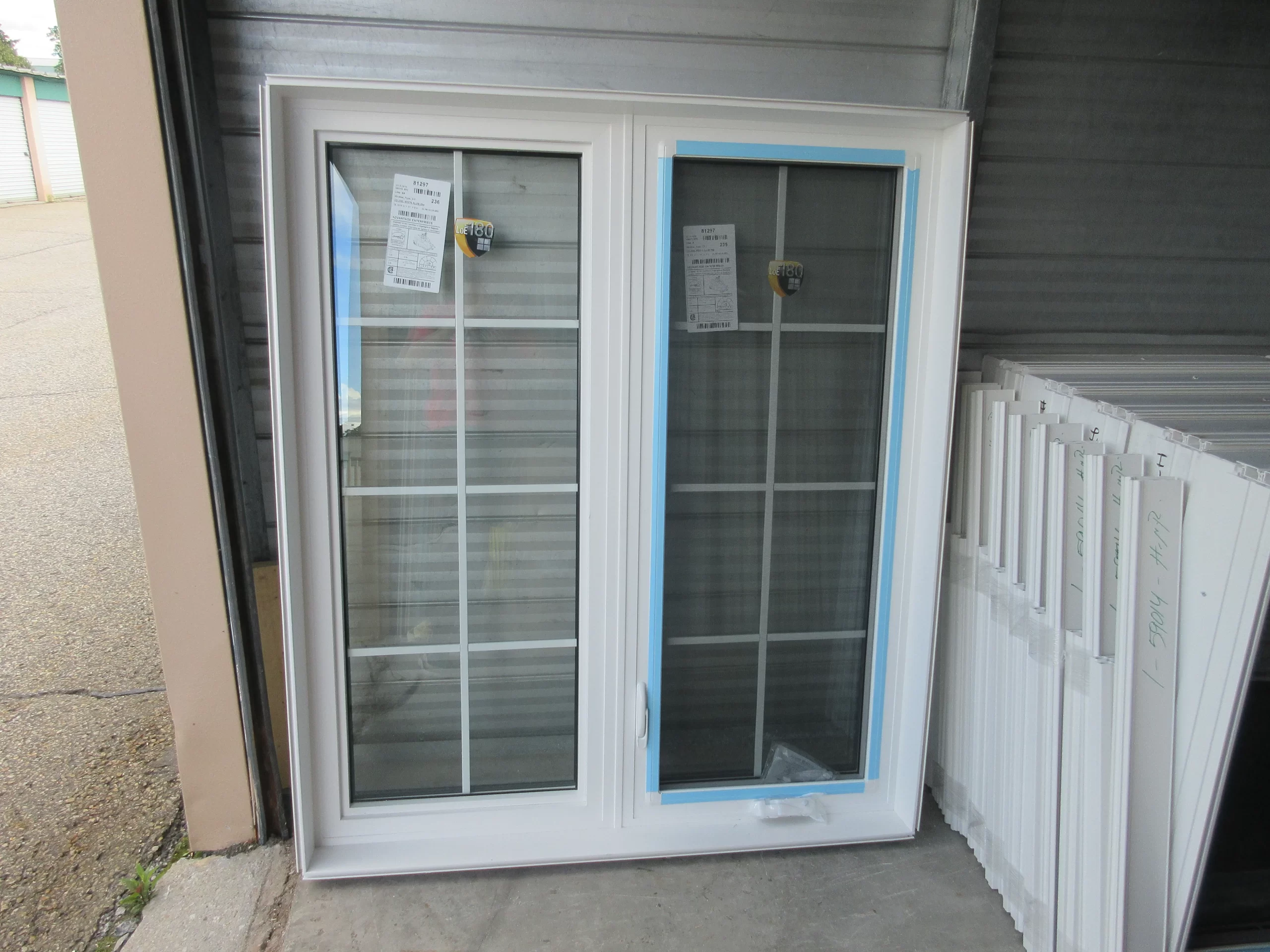
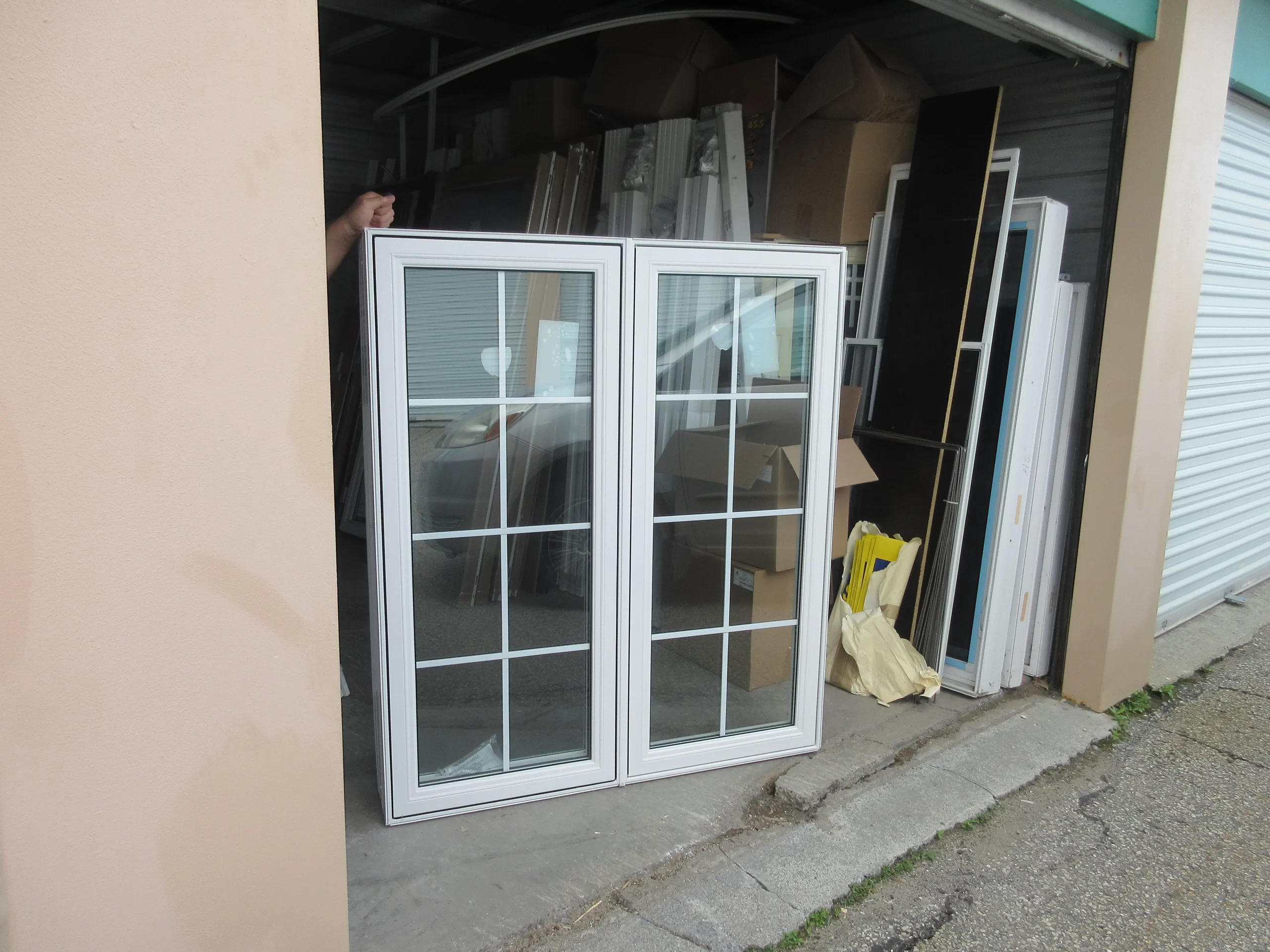
- Single casement: one crank-out sash, hinged left or right.
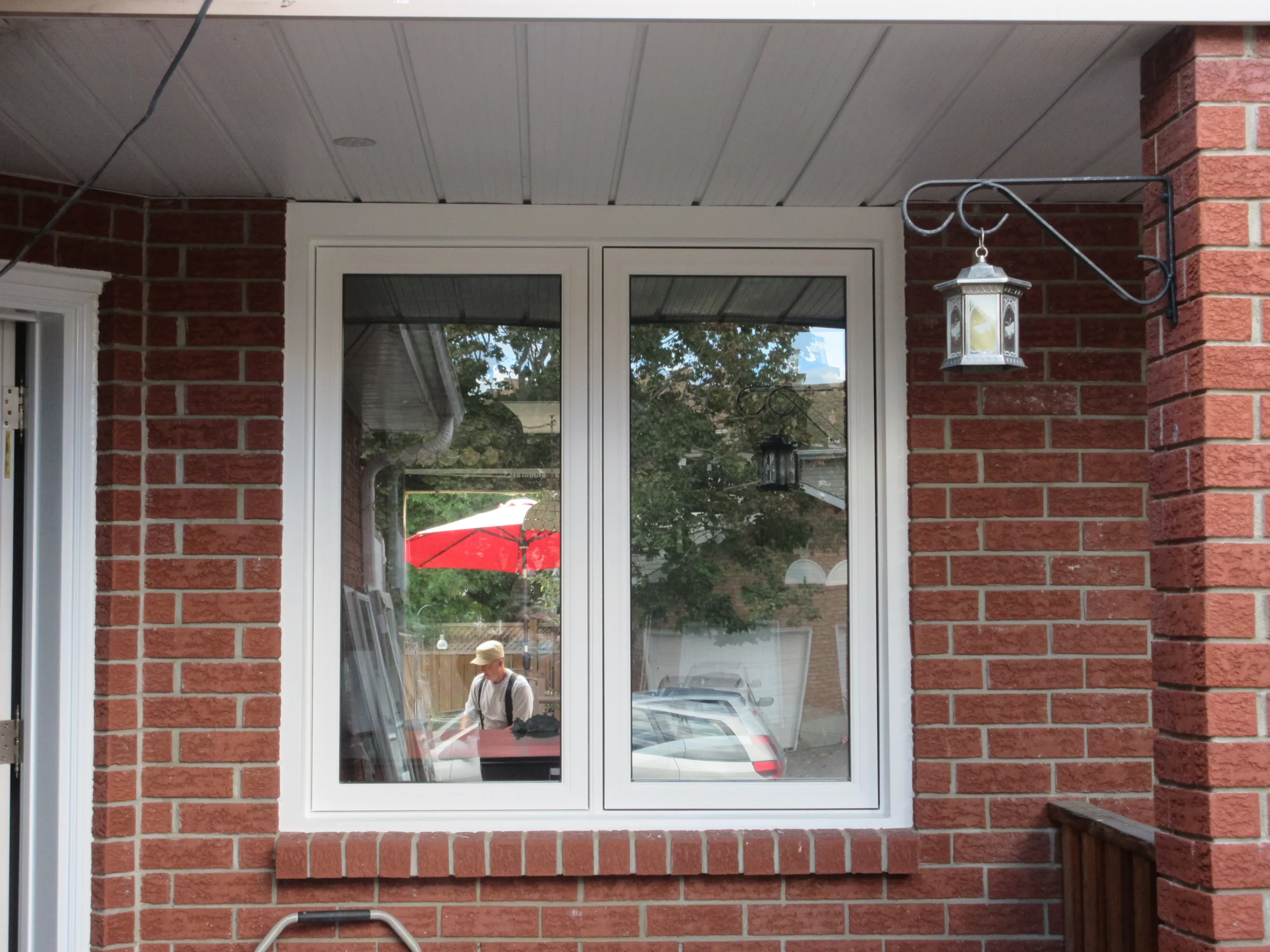
- Double casement: two sashes in one frame that open away from each other, with no centre post blocking the opening.
- Casement with picture window: operable casements on one or both sides of a large fixed pane. Popular for living rooms.
- Casement over awning: a casement on top for airflow, an awning below that can stay open in light rain.
Need a window that doesn’t open at all, sized to match your casements? See our fixed casement windows.
How the Frame is Built
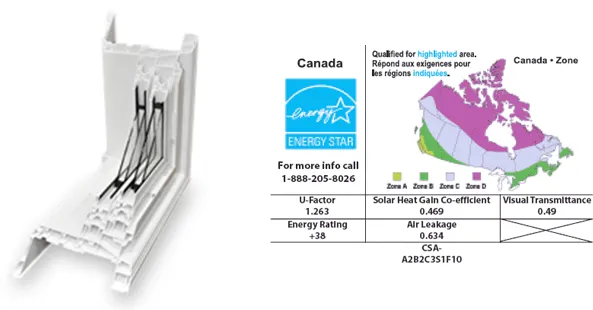
The frame and sash are made from a 100% lead-free uPVC compound that resists impact and won’t fade, rot or need painting. The corners are fusion-welded, meaning the vinyl is melted together rather than screwed or glued. Inside, several hollow chambers trap air for insulation and help reduce outside noise.
Two frame depths are available:
|
Frame depth |
Best for |
|
3-1/4″ |
Replacing windows in existing openings where wall depth is limited |
|
4-9/16″ with integrated brickmould |
Brick and stucco homes, new openings, and maximum rigidity in cold weather |
Between the panes is a non-metal foam spacer. Metal spacers conduct cold to the edge of the glass, which is where winter condensation usually starts. A foam spacer keeps that edge warmer.
Colours and Finishes
White is standard. Over 100 custom colours are available on the exterior, interior or both. Painted frames receive four coats for light colours and six coats for dark colours. A three-stage wood-look stain is available for homeowners who want the warmth of wood without the upkeep. Simulated divided lite and internal grilles are available for heritage-style homes.
Inside, choose from vinyl jamb extensions, step casing, or classic or contemporary rosette trim. Outside, brickmould comes in 5/8″, 1-1/4″ and 2″ sizes and in matching colours.
Brick-to-Brick or Retrofit Installation?
How your old window comes out decides how good the new one looks and performs. We give you both options at the estimate.
|
|
Brick-to-brick (full replacement) |
Retrofit (insert) |
|
What we remove |
The entire old window, frame and exterior trim |
The old sashes; the old frame stays |
|
Glass area |
Largest possible |
Slightly smaller |
|
Inspect rot or gaps in the opening |
Yes |
No |
|
Insulation |
New spray foam around the whole frame |
Limited to the gap inside the old frame |
|
Best when |
The old frame is damaged, drafty or wood |
The old frame is sound and you want a faster install |
We recommend brick-to-brick for most Ottawa homes built before 1995. Their original aluminum or wood frames are often the real source of drafts.
Every installation follows the same steps:
- Measure and assess. We check the opening for rot, level and egress size, and confirm your glass package.
- Remove carefully. The old unit comes out without damaging your interior drywall or exterior cladding.
- Prepare the opening. We repair the sill, add a sloped base and apply a waterproof membrane.
- Install and insulate. The window is shimmed square, fastened and sealed with low-expansion foam.
Finish and test. We install trim and caulking, test the crank and lock, and clean up before we leave.
Warranty
|
What’s covered |
Length |
|
White uPVC frame and sash |
25 years |
|
Colour painted (baked-on) frames |
10 years |
|
Hardware: crank, hinges, locks |
Lifetime |
|
Sealed glass unit (fogging or moisture between panes) |
10 years |
|
Installation workmanship |
10 years |
Cracked or broken glass is covered only if reported within one week of installation.
Casement or slider: which is right for you?
| Casement | Sliding window | |
| Ventilation area | Full sash opens | About half the window opens |
| Air sealing | Compression seal, tightest | Brush seals, good |
| Easy to open over a counter | Yes, crank handle | Harder |
| Fits under a deck or walkway | No, sash swings out | Yes |
| Price | Slightly higher (crank and hinge hardware) | Lower |
If the window opens onto a deck, a walkway, or a narrow side yard, an outward-swinging sash can get in the way. In that case, we usually suggest a single slider or double slider instead.
What Our Clients Say


Working Gallery
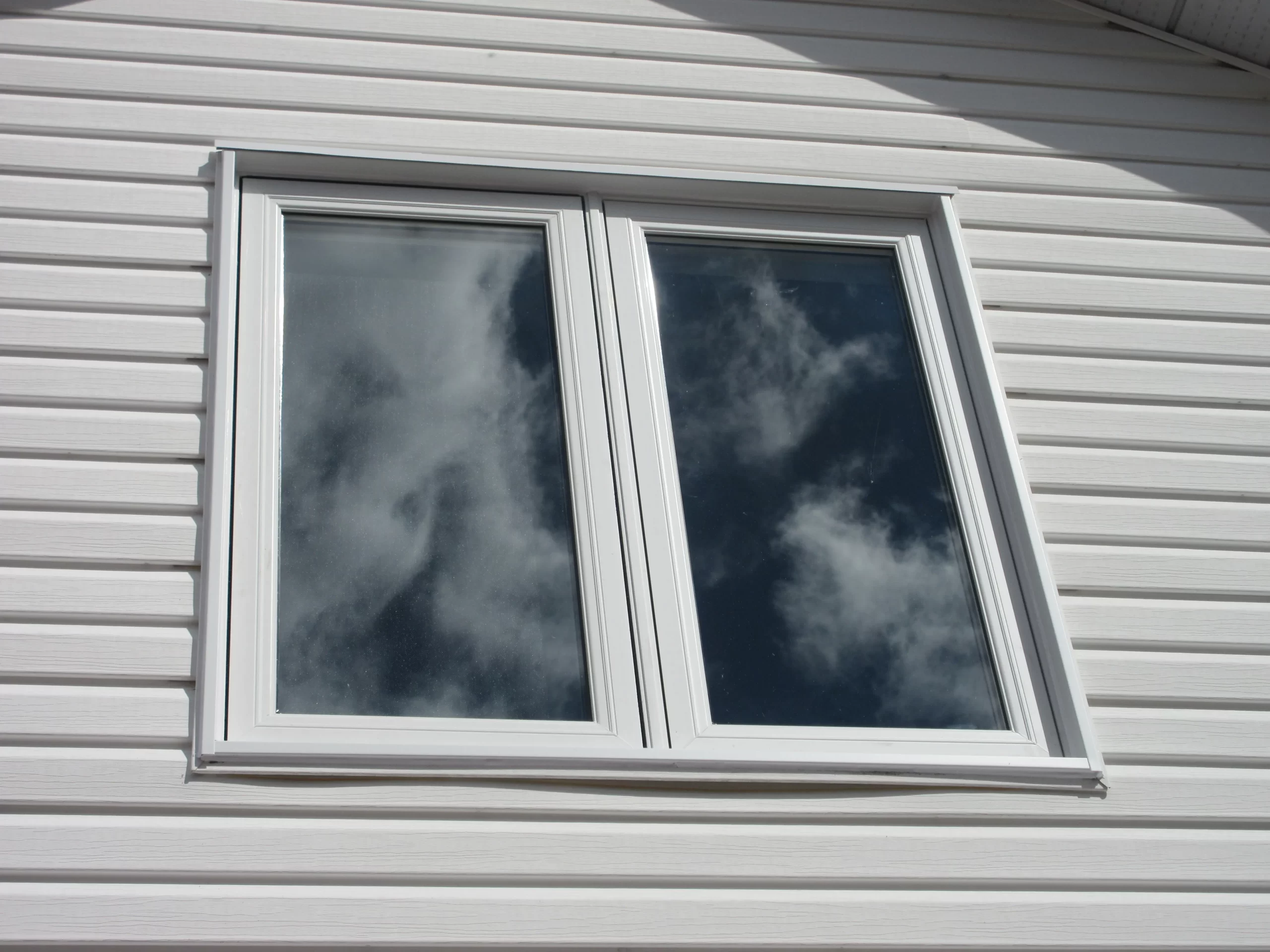
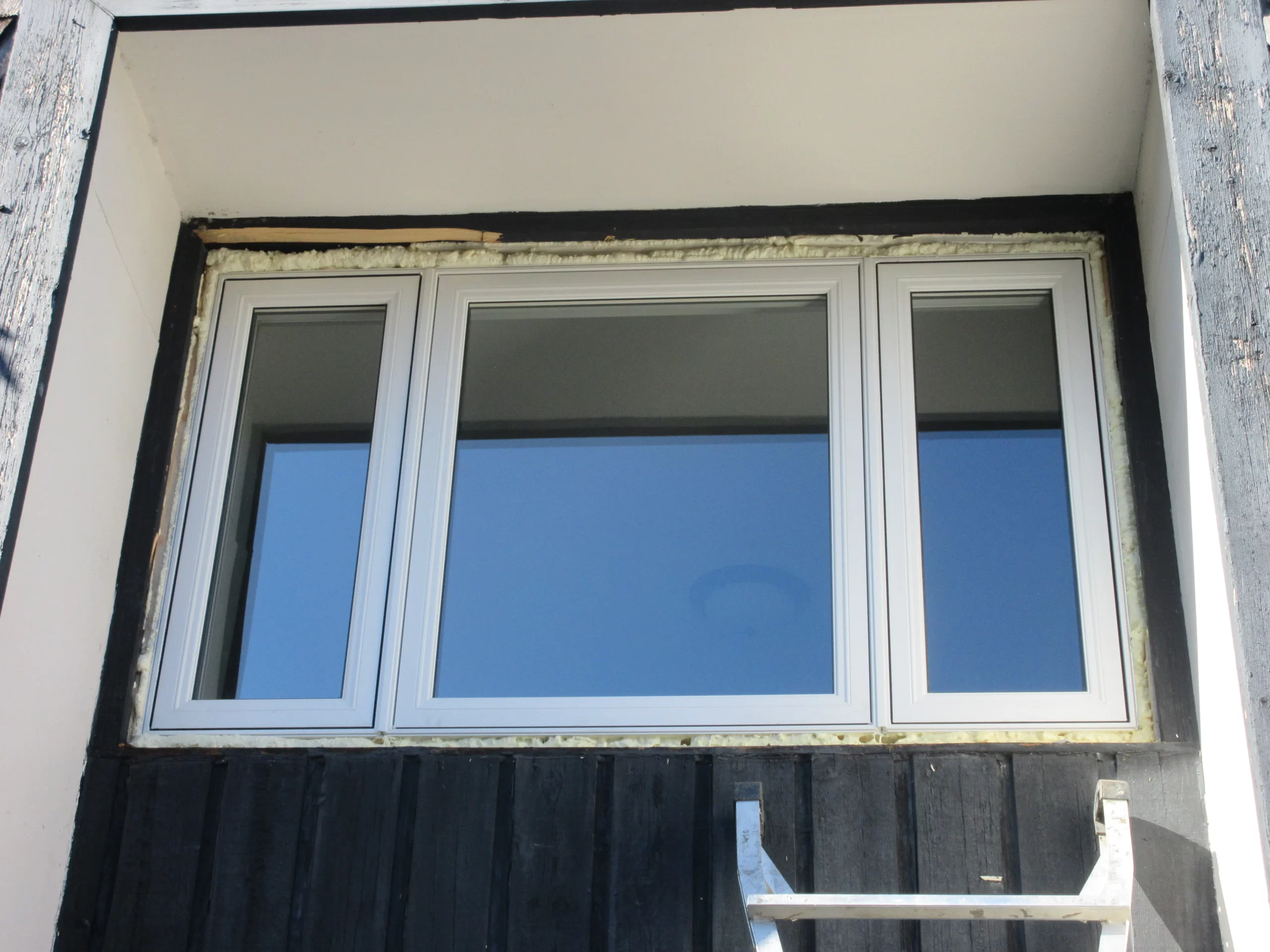
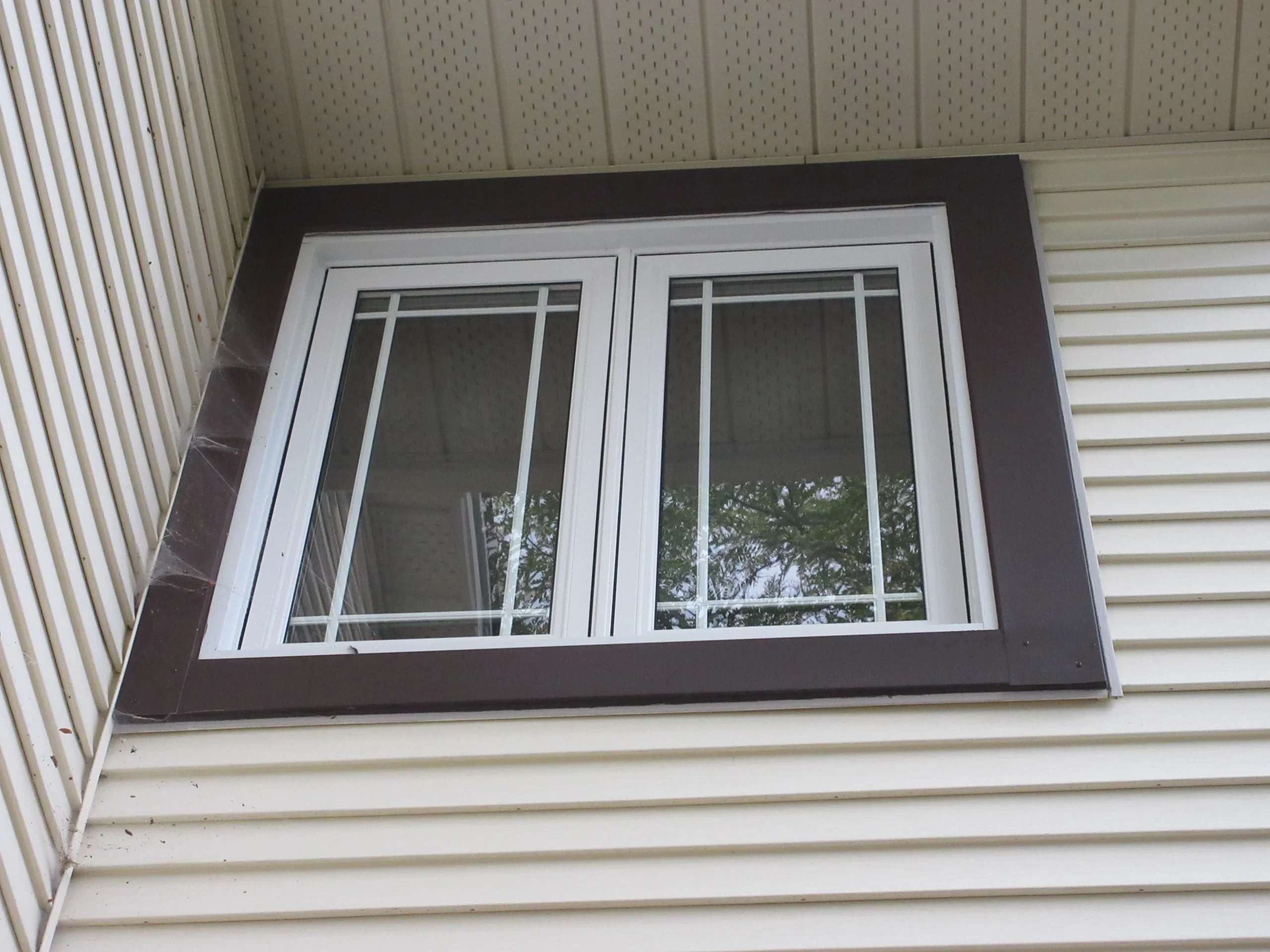
Ready to replace your windows?
Tell us which rooms you’re thinking about, and we’ll measure, recommend the right glass package and give you a written quote. Estimates are free and there’s no obligation.
FAQs
Will my casement crank freeze in winter?
The crank itself doesn’t freeze, but on very cold, humid days the sash can stick to its seal. Don’t force the handle. Let the room warm slightly, or run a fan to lower humidity, and it will release. Wiping the weatherstripping with a silicone spray each fall prevents most sticking.
How long do vinyl casement windows last?
With a fusion-welded uPVC frame and sealed glass, most last 25 to 30 years. The crank operator is the part that wears first, and it is covered by our lifetime hardware warranty.
Can a casement window be used as a bedroom egress window?
Yes, and it is often the best choice. Because the whole sash opens, a casement can meet Ontario’s minimum egress opening in a narrower frame than a slider. We measure for this on every bedroom.
Do casement windows cost more than sliders?
Usually a little more, because of the crank and hinge hardware. Size, glass package, colour and whether we do a brick-to-brick or retrofit install affect the final price. We give you an exact, written quote after measuring.
Is triple pane worth it for a casement window in Ottawa?
For most rooms, a double-pane Low-E unit already meets ENERGY STAR. Triple pane makes the biggest difference on north-facing walls, rooms over unheated spaces, and bedrooms near traffic noise.
How do I clean the outside glass of a casement window?
Crank the sash fully open. At 90°, there is enough space to reach the exterior glass from inside the room, even on a second floor.
Windows & Doors in Ottawa
Call Now: (613) 850-7887